Experience

Most of my experience is in robotics labs and small hardware teams. At Serpent Robotics, I work on the electronics for a rope-climbing robot; at GRASP, on a multi-axis 3D printer and an imaging system; at Penn ADAPT, on EMG sensing for a bionic arm. At BrainChild, I built hardware for clients. Each role links to the projects behind it.

Use the filters if you only want internships or only school clubs.

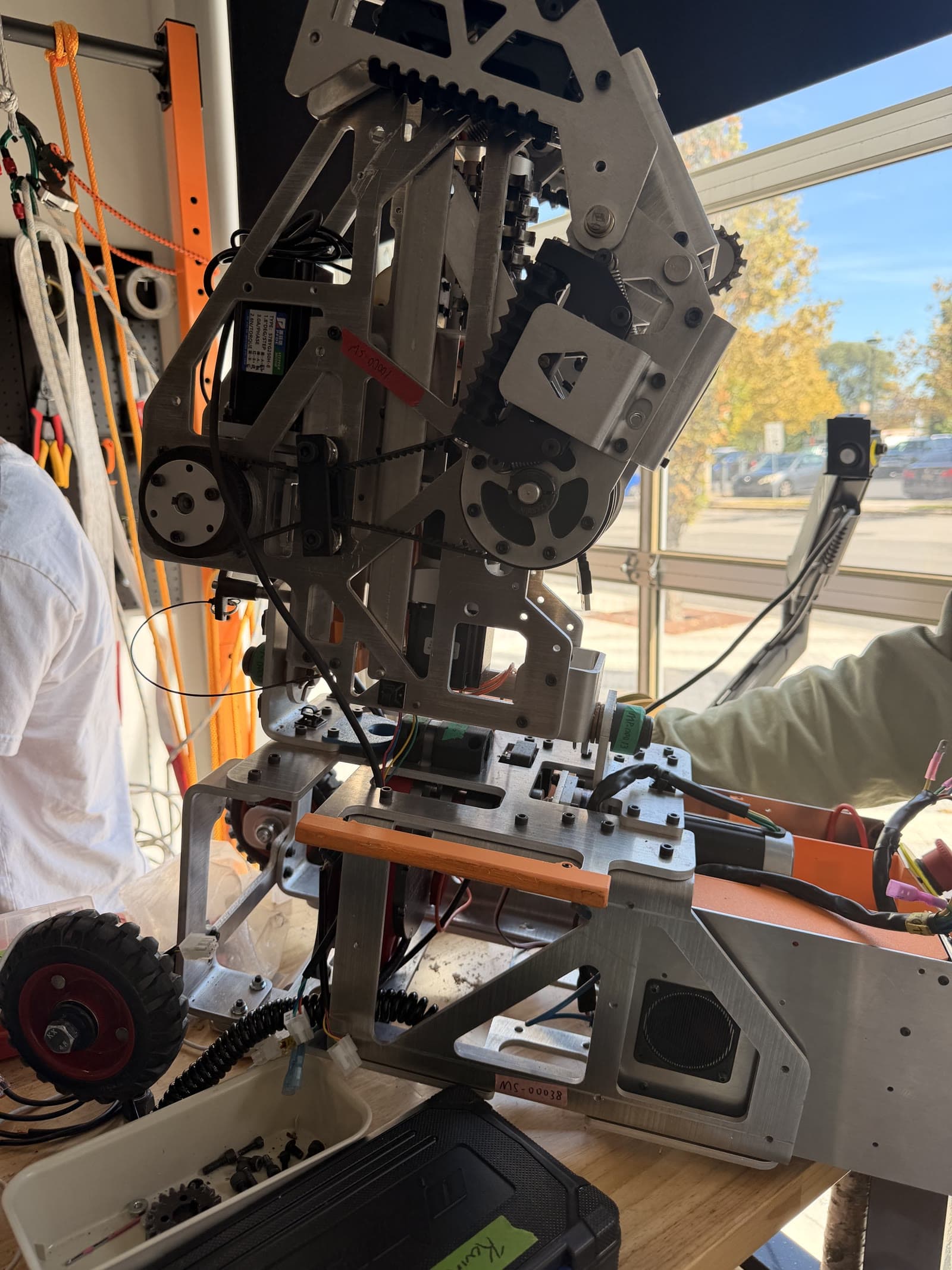
SR-01 aluminum chassis on a workbench, with belts, gears, and an orange beam

Robotics & Controls Intern — Serpent Robotics

Philadelphia, PA · Sep. 2026 – Present

Serpent Robotics builds rope-climbing robots for tree care.

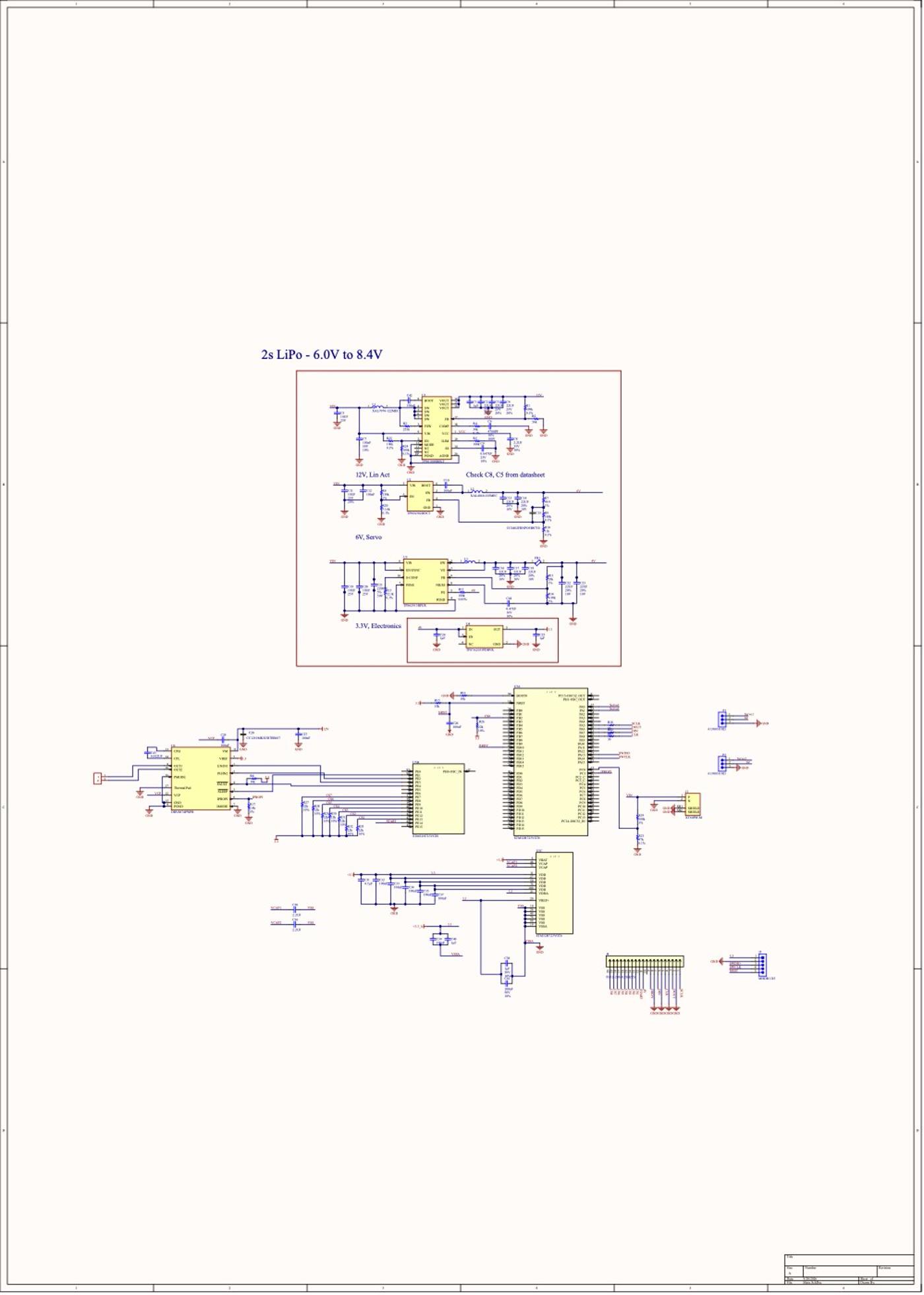
  • Power and logic boards: I modified them as one set, 5–20 A fusing, DC-DC, and RS-485 and I2C.
  • V1 is the pair on the homework sheet. The boards I tested were V2. I still have not mapped the fuse markings to a branch.
  • Leader-follower: I moved the existing sender off a fixed IP onto a name lookup, and I traced a still follower to a dead motor pack.
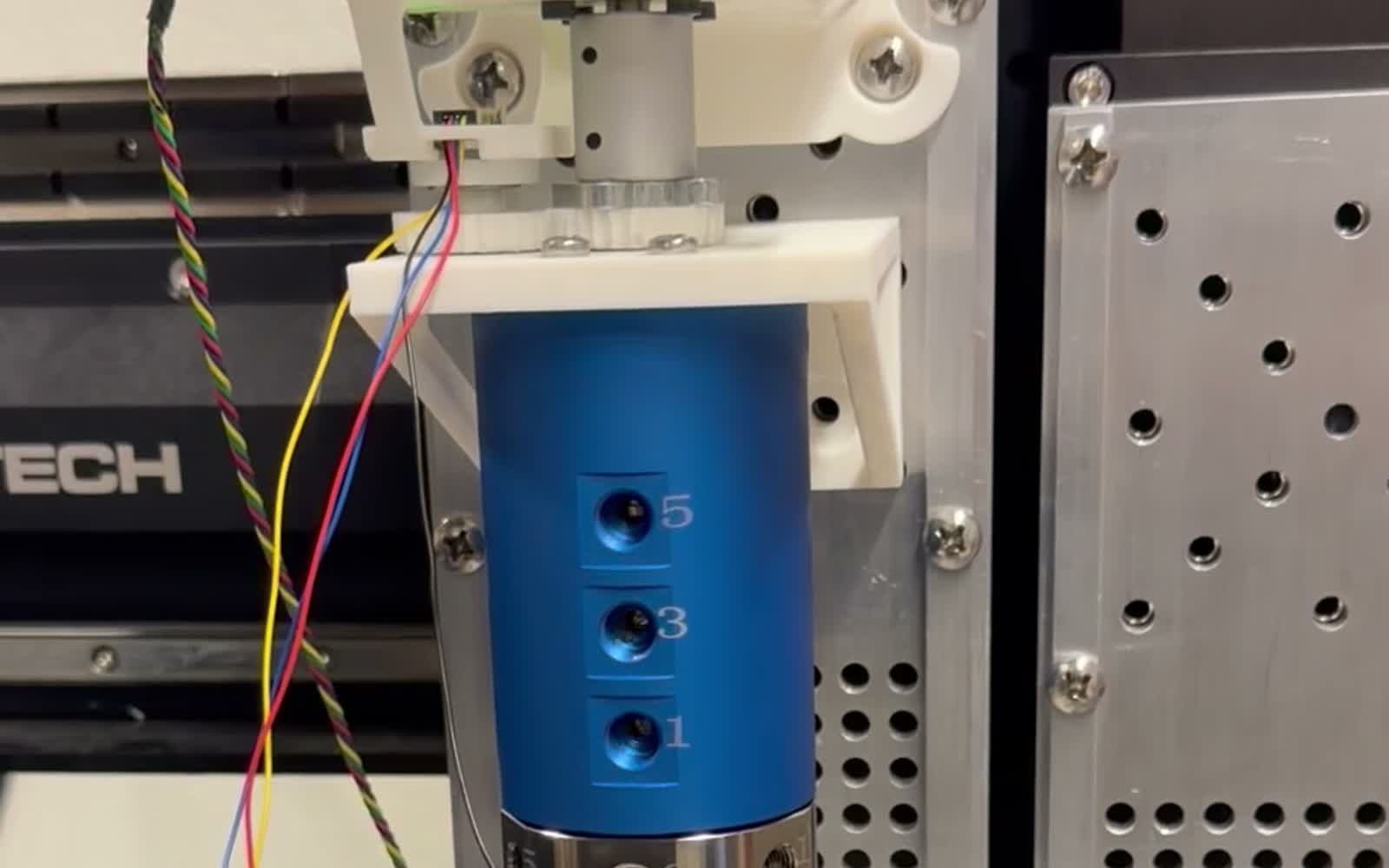
Blue motor housing marked 5, 3, and 1 on a white printed bracket, with an Aerotech column behind it

Robotics, Sensing, & Controls Research Intern — GRASP Laboratory

Philadelphia, PA · ModLab & AddLab · Aug. 2026 – Present

The General Robotics, Automation, Sensing and Perception Laboratory is Penn's robotics lab.

  • AddLab printer: reassemble the Aerotech toolhead and split the Arduino sketch into stepper, encoder, and PID files.
  • Nozzle axis: a 5:1 geared NEMA 17, an A4988, an AS5600, and an Arduino Uno on a 24 V motor supply.
  • ModLab imager: a TSL1401 line sensor on an nRF54L15. One scan is 128 values.
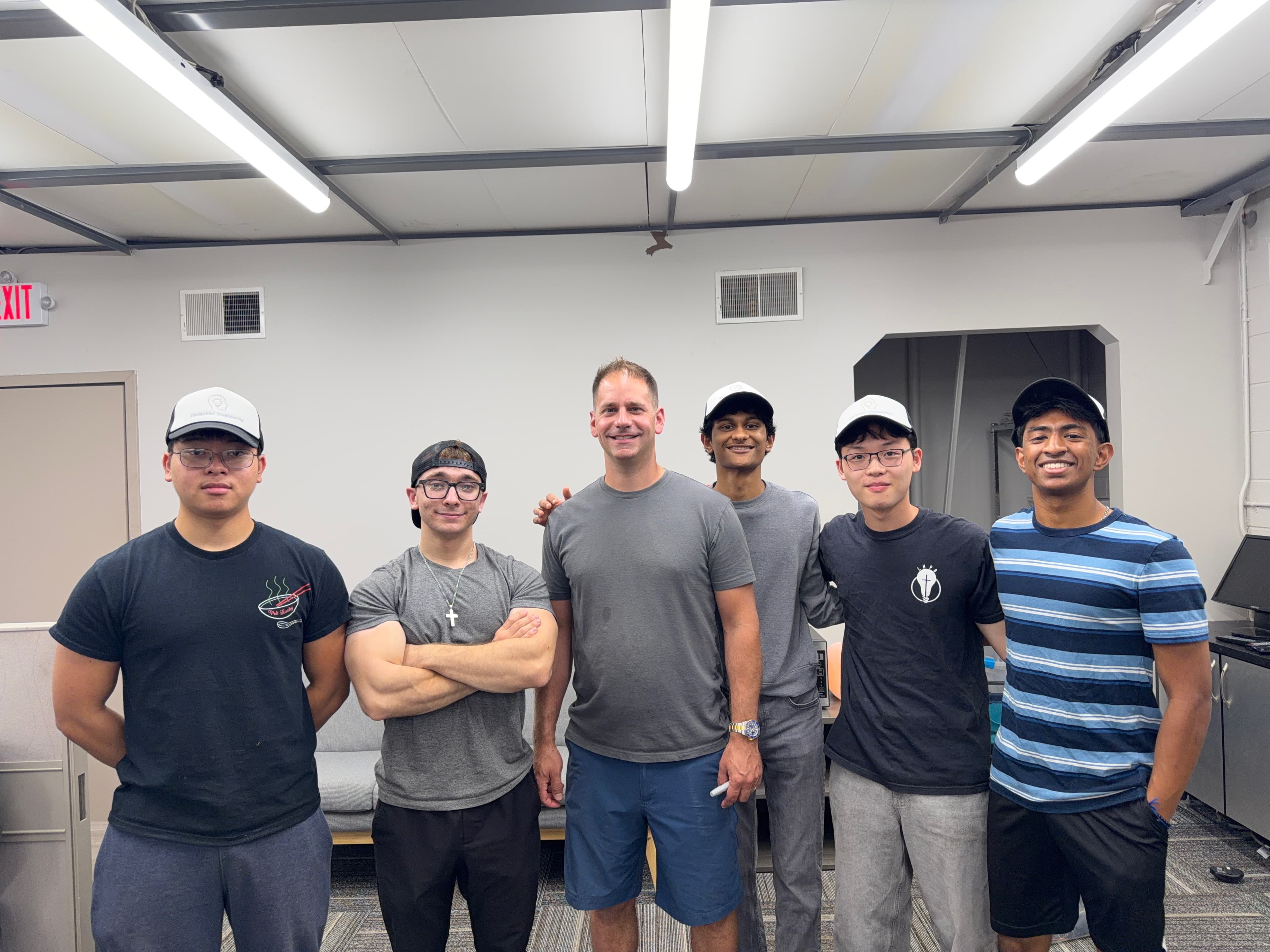
BrainChild Engineering team in the workshop

Hardware Engineering Intern — BrainChild Engineering

Novi, MI · May 2026 – Aug. 2026

BrainChild Engineering is a hardware firm in Novi, Michigan.

  • Vend-A-Shoe: a web command queue, a Raspberry Pi worker, and servo actuation in a packaged client unit.
  • Built a tennis-ball launcher prototype on ESP32 with dual RS-775 flywheels, NEMA 17 feed, and PWM-switched MOSFET drive.
  • On the launcher, a PWM test oversped a motor. The fuse did not open, a solder joint came off, and a wire melted.
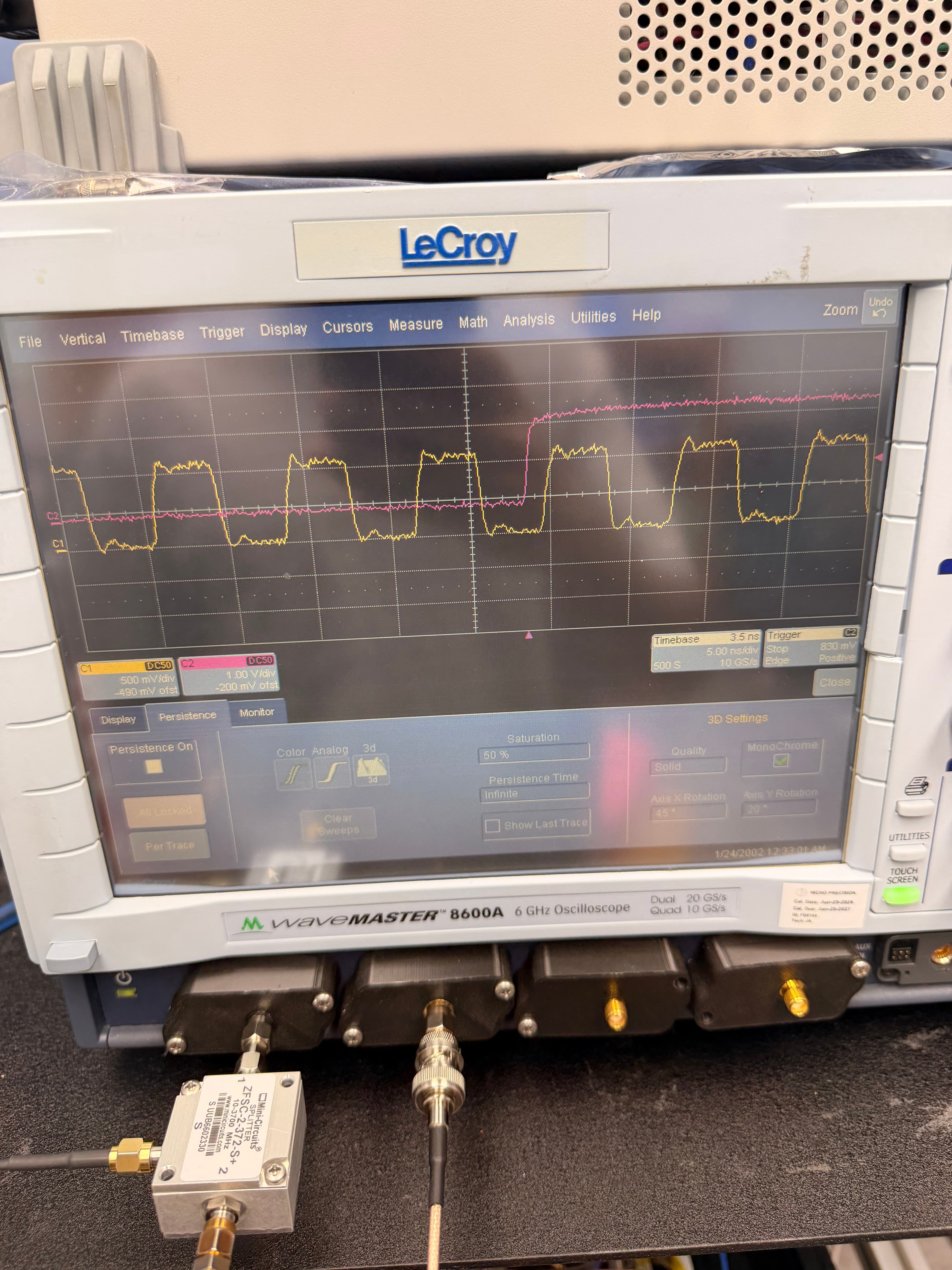
LeCroy WaveMaster 8600A oscilloscope on a lab bench, bezel marked 6 GHz

Electrical & Photonics Engineering Lab Assistant — Quantum Opus

Plymouth, MI · May 2026 – Aug. 2026

Quantum Opus builds superconducting nanowire single-photon detectors, and the cryostats that hold them cold.

  • I set up the fiber path and the attenuation, then looked at the electrical pulse.
  • The detector was saturating because one laser pulse carried too many photons. Attenuating the light is how I separated that from a bad detector.
  • The photo of that path is three OA 5002 attenuators. One reads 30.91 dB at 1600 nm. Two display FAIL.

AI Engineering Intern — Stealth Startup

Remote · Apr. 2026 – Jun. 2026

A stealth startup.

  • Startup was about 30 seconds. I traced it through Next.js, Pipecat, Daily WebRTC, Tavus, and the language and speech services.
  • The avatar, the model, and speech were coming up in the wrong order.
  • After that change, startup was about 7 seconds.
Main board schematic with a 2-cell LiPo note, actuator, servo, and 3.3 V rails, and an STM32

Hardware Engineer · ADAPTLab — Penn ADAPT xLab

Assistive tech · HMS collaboration · Current

Members design assistive devices and prosthetic technology.

  • Button: one press becomes space or tab. Debounce keeps switch chatter from counting twice.
  • Bionic arm: PCBs and mounts. Two longer wires still block the CAD fit.
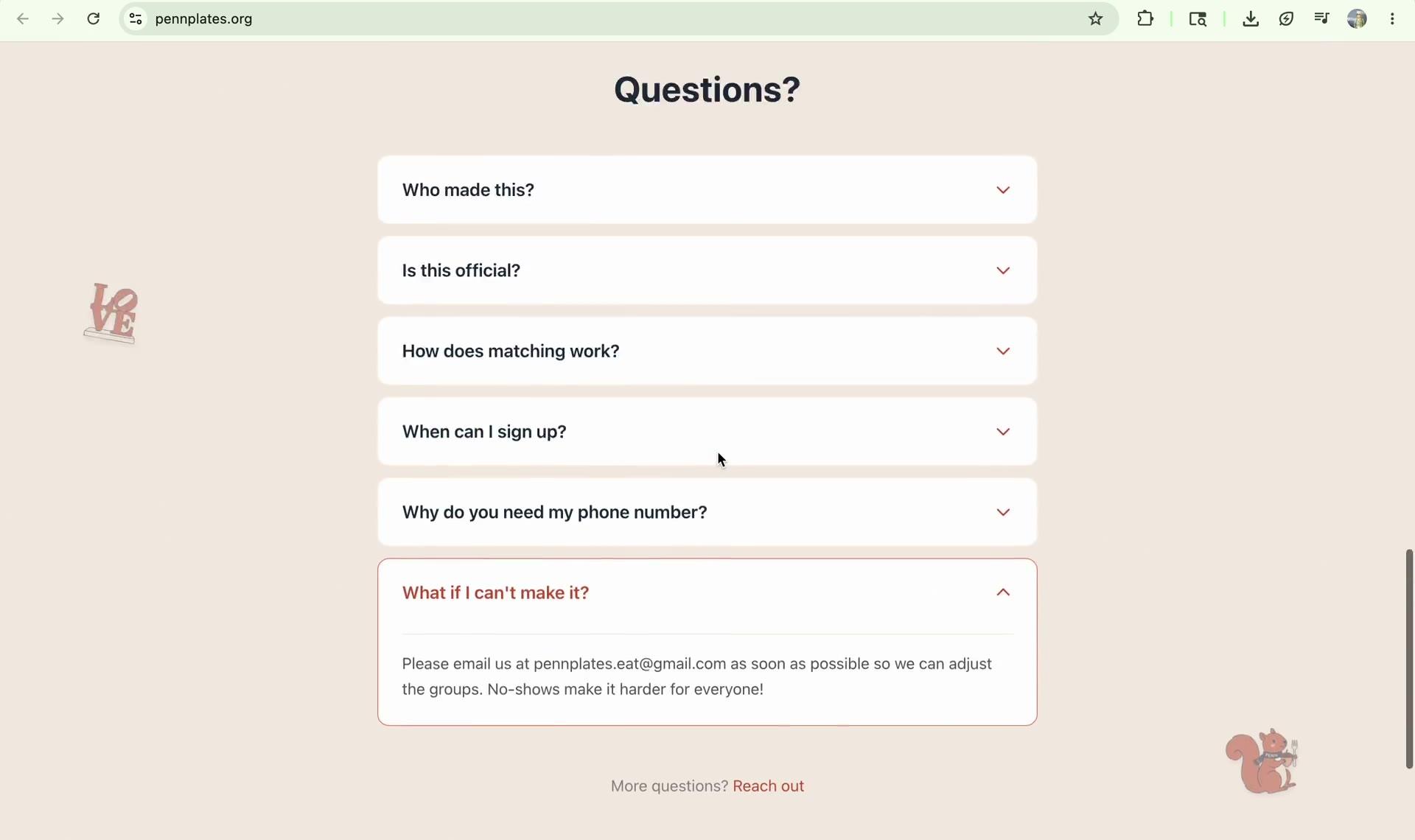
Penn Plates demo

Software Engineer — Penn SPARK

Student engineering · product builds · Current

Penn Spark is a student community at Penn, started in Spring 2021.

  • Software engineer on Penn SPARK product teams.
  • Built Penn Plates (Next.js + Supabase) with student auth, profiles, and a dining coordination loop.
  • Cut scope to protect one usable flow under the SPARK timeline instead of chasing feature density.