Penn
Coursework
Two Fall 2026 courses, with the reports attached. ESE 2180 is semiconductors on a spectrophotometer, a laser bench, and a solar cell. ESE 2150 is the circuits those devices sit in, from a Wheatstone bridge to an LM324AN comparator and a 3-bit DAC.
ESE 2150 · Fall 2026
Circuits & Systems
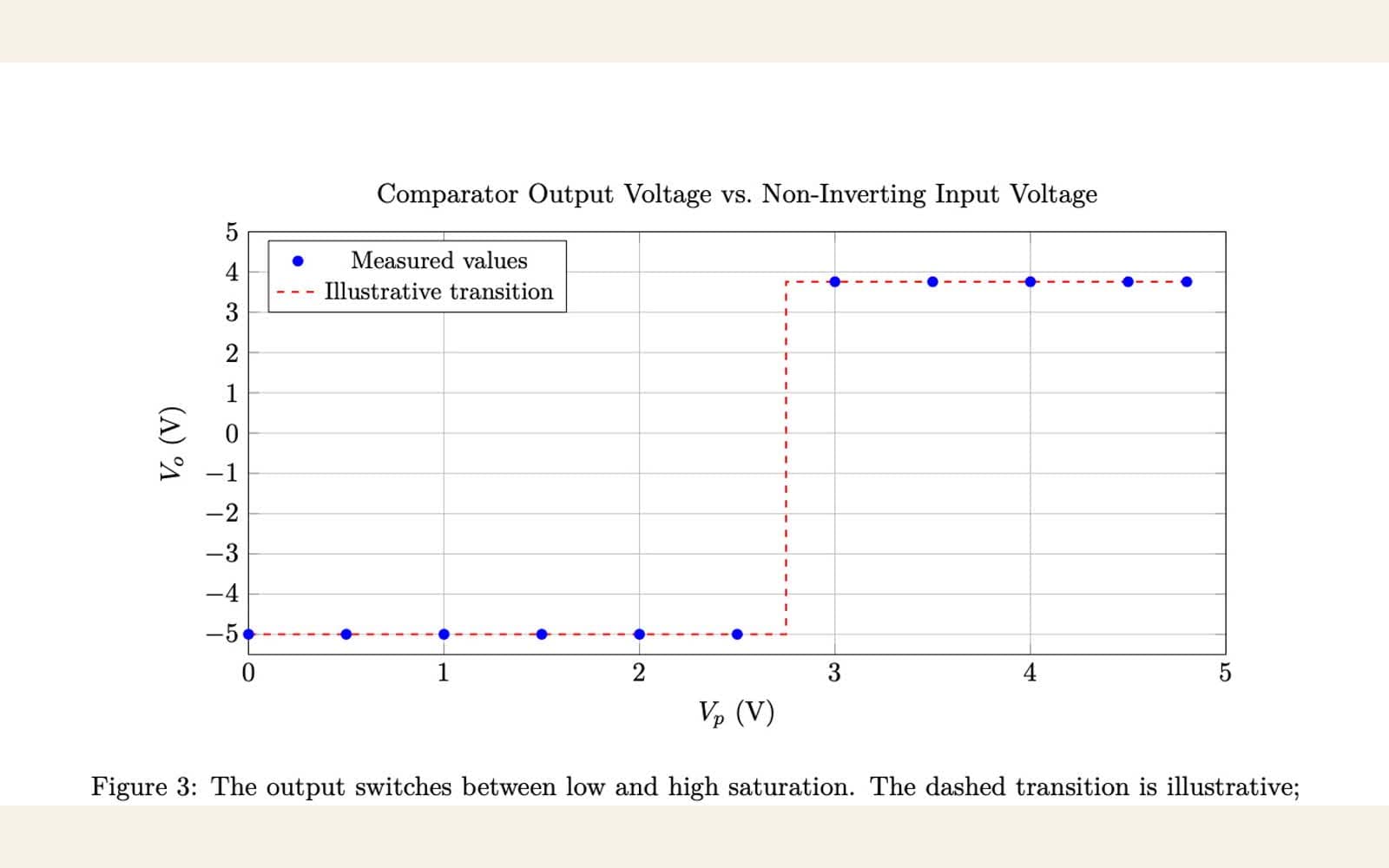
Fall 2026. I build the circuit, then put a meter on it. A Wheatstone bridge, nodal and mesh checks, an LM324AN comparator that switches from about -5 V to about 3.76 V, a voltage follower that tracks to 3.5 V, and a 3-bit DAC. Labs 2 through 5 have reports. Lab 6, series RLC, is assigned and not written up yet.
- LM324AN comparator output sat near -4.997 V, then switched to about 3.758 V on ±5 V rails.
- The voltage follower tracked the input from 0 V to 3.5 V, then stopped near 3.75 V.
- Wheatstone bridge, nodal and mesh checks, and a 3-bit DAC, each with a report.
ESE 2180 · Fall 2026
Electronic & Photonic Devices
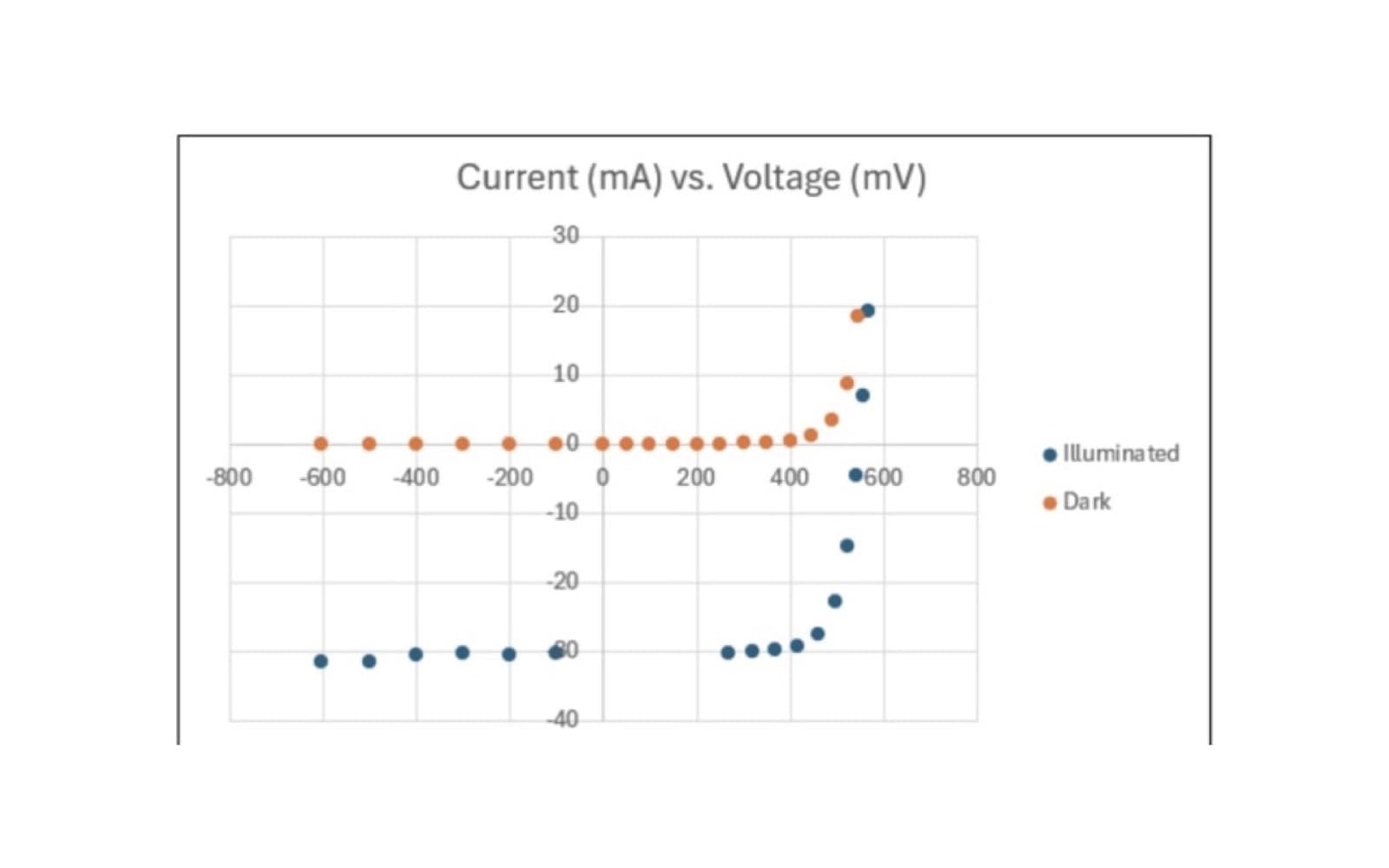
Fall 2026. I measure the optical and electrical behavior of real semiconductors: band gaps on a Cary 5000, photoluminescence of GaAs and InP, LED composition from emission spectra, and a silicon cell under a phone flashlight. Labs 2, 3, and 4 have reports.
- Absorption band gaps from Si at 1.125 eV (0.4% off 1.120) to GaAs at 1.393 eV (2.2% off 1.424).
- GaAs photoluminescence peaked at 871 nm, 1.424 eV, 0.03% from the known gap.
- Silicon cell under a phone flashlight: 545 mV open circuit and fill factor 0.79. The 16.7% figure is an estimate that scales current against a 1-sun label. The flashlight was not a calibrated solar source.