Hardware Engineer · ADAPTLab — Penn ADAPT xLab
Assistive tech · HMS collaboration · Current
Members design assistive devices and prosthetic technology.
- Button: one press becomes space or tab. Debounce keeps switch chatter from counting twice.
- Bionic arm: PCBs and mounts. Two longer wires still block the CAD fit.
Overview
Hardware work on an assistive button for an HMS collaboration, and on the bionic arm's PCBs and mounts.
Related projects
My contribution
Button: one press becomes space or tab. Debounce keeps switch chatter from counting twice. Bionic arm: PCBs and mounts. Two longer wires still block the CAD fit.
Full engineering log
My work
Assistive button
This button is for an HMS collaboration, separate from the arm. One press has to come out as space or tab. The switch chatters, so debounce has to keep a second key from firing.
Bionic arm electronics
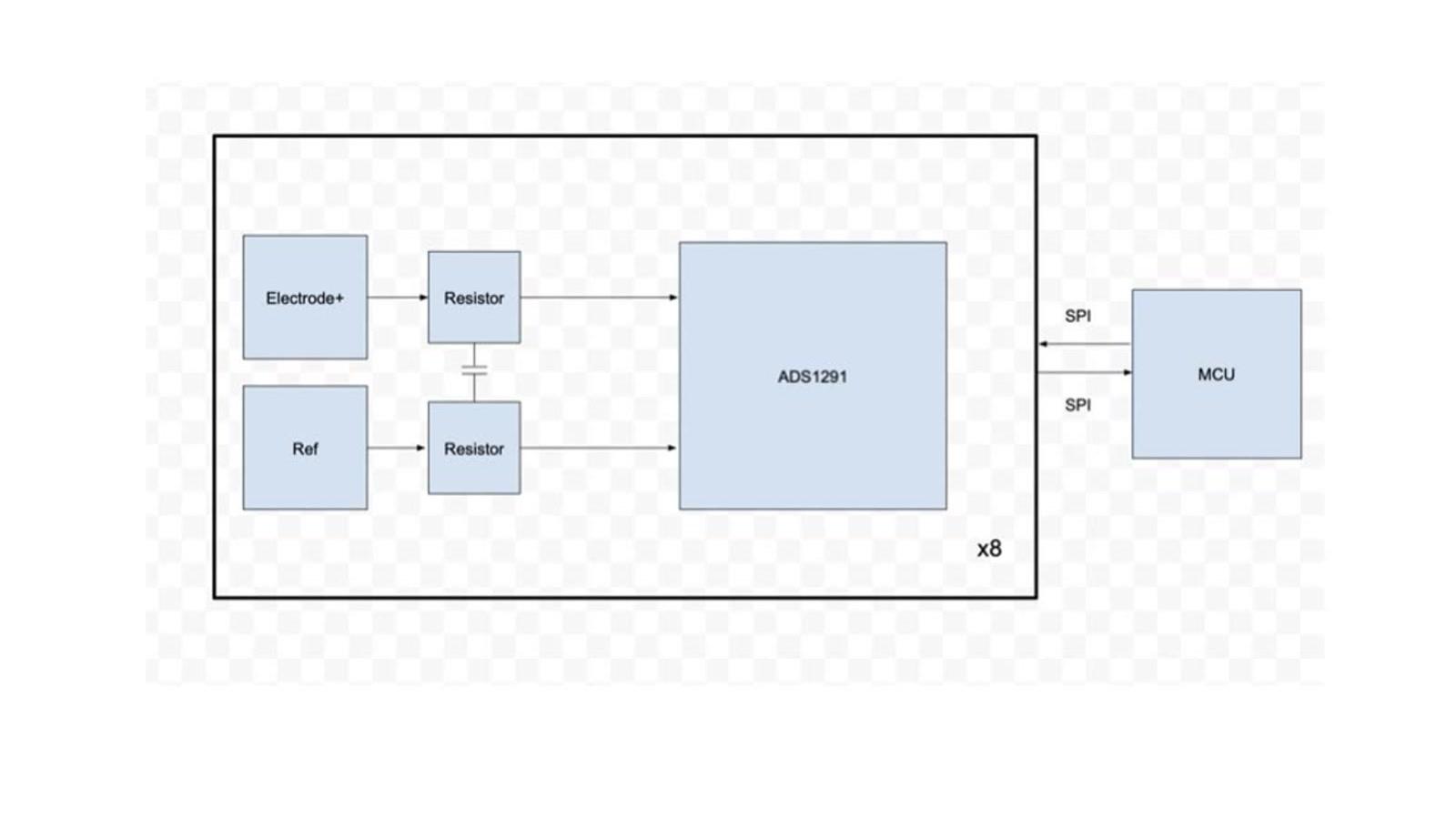
I design the sensor PCB, the main PCB, and the mounts. One sensor board is built: a differential pair into one ADS1291. The eight-module armband is the architecture. The team tested the main board and started the first fixture. Firmware reads raw EMG from one channel and can run a fixed motor test. It does not drive the arm from EMG. The write-up is the Bionic Arm.
A closer look
One press has to stay one press
A mechanical switch doesn't close once. The contacts bounce, and a naive read turns that bounce into two key events. For someone using this button as space or tab, a second key is the failure.
I worked the switch, the debounce, and the firmware that emits the key. The button is still in progress.