Software Engineer — Penn SPARK
Student engineering · product builds · Current
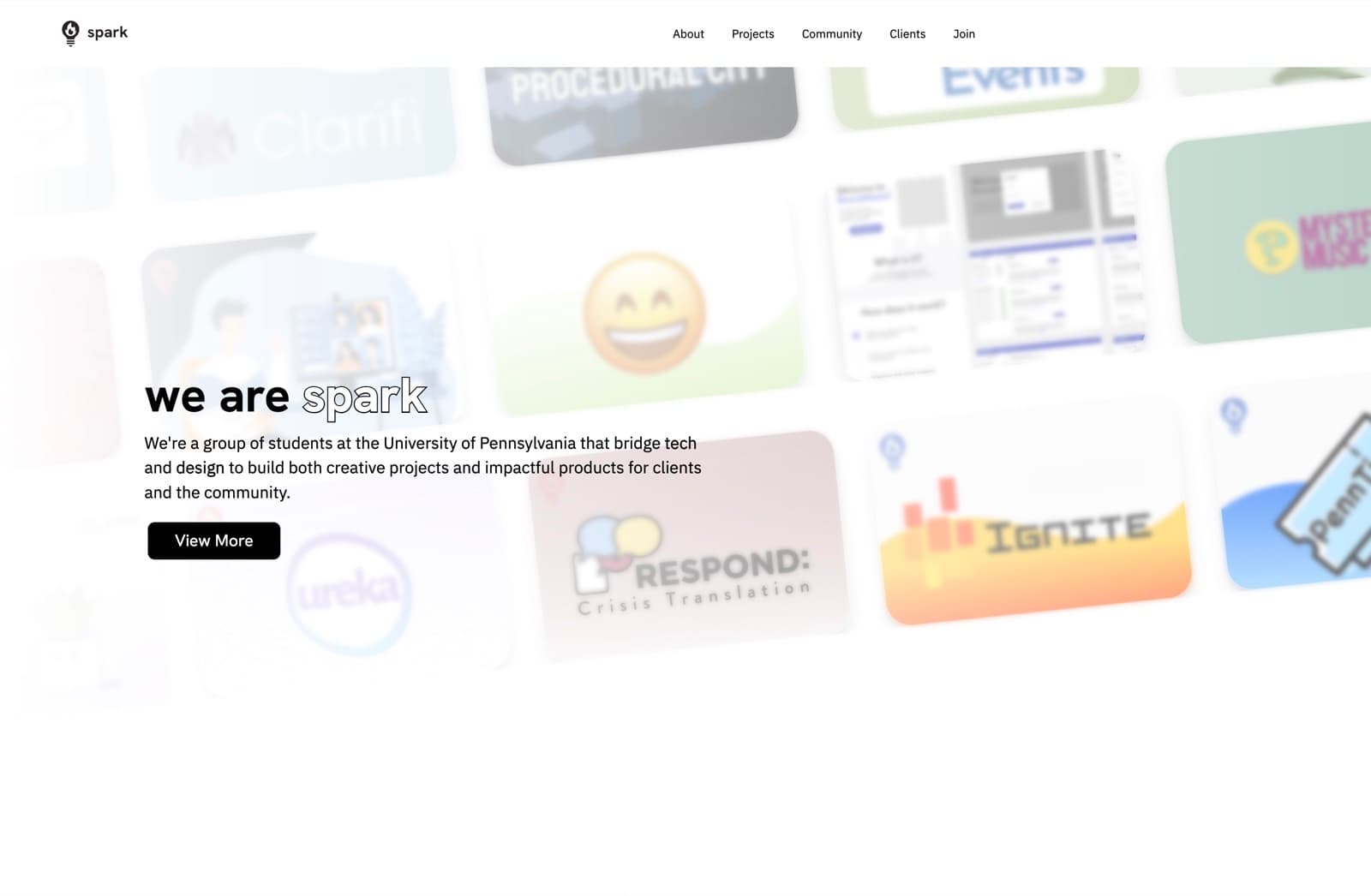
Penn Spark is a student community at Penn, started in Spring 2021.
- Software engineer on Penn SPARK product teams.
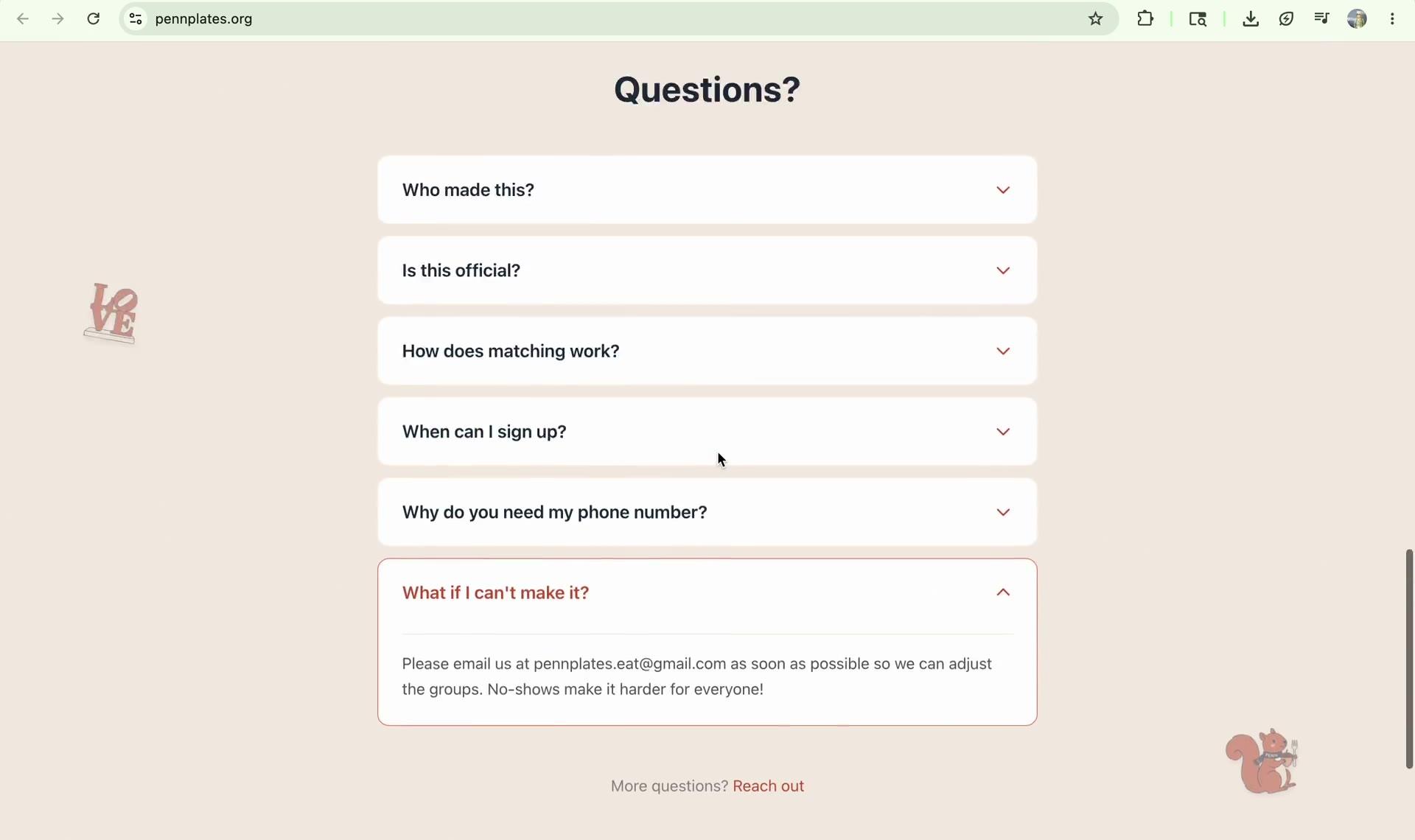
- Built Penn Plates (Next.js + Supabase) with student auth, profiles, and a dining coordination loop.
- Cut scope to protect one usable flow under the SPARK timeline instead of chasing feature density.
Overview
Penn SPARK is a student product group. My main piece is Penn Plates, a Next.js and Supabase app for coordinating around campus dining. Auth and row-level security had to be right. We cut scope so there was a working demo instead of a pile of half-finished screens.
Related projects
My contribution
Software engineer on Penn SPARK product teams. Built Penn Plates (Next.js + Supabase) with student auth, profiles, and a dining coordination loop. Cut scope to protect one usable flow under the SPARK timeline instead of chasing feature density.
Results
Auth first, then the extra screens. Shipped. The project page is , and the app is at pennplates.org.
Full engineering log
My work
I am a software engineer in Penn Spark. The role is ongoing. The piece I built is Penn Plates, a campus dining app. Students sign in, keep a profile, and use one dining loop. The live app is at pennplates.org.
The constraint was the Spark timeline. Auth had to be real, including row-level access on Supabase, and extra screens had to go so the one loop could be used.
- Shipped: Penn Plates, Next.js and Supabase.
- My scope choice: one dining loop, with auth and profiles, instead of a longer feature list.
What I learned
Auth first, then the extra screens
Problem. A dining app that students actually open needs accounts that hold. A long feature list on an eight-to-twelve week student timeline does not.
Approach. I built Penn Plates on Next.js and Supabase, with sign-in, profiles, and row-level access, and cut screens that were not the dining loop.
Outcome. Shipped. The project page is Penn Plates, and the app is at pennplates.org.