Machine Learning for Muscular Dystrophy Diagnosis
I used GEO gene-expression data to compare classical models on muscular dystrophy samples versus controls.
IndependentBioinformaticsData Pre-ProcessingMachine LearningNumPyGene Expression Omnibus (GEO)
PROJECT CASE STUDY
OVERVIEW
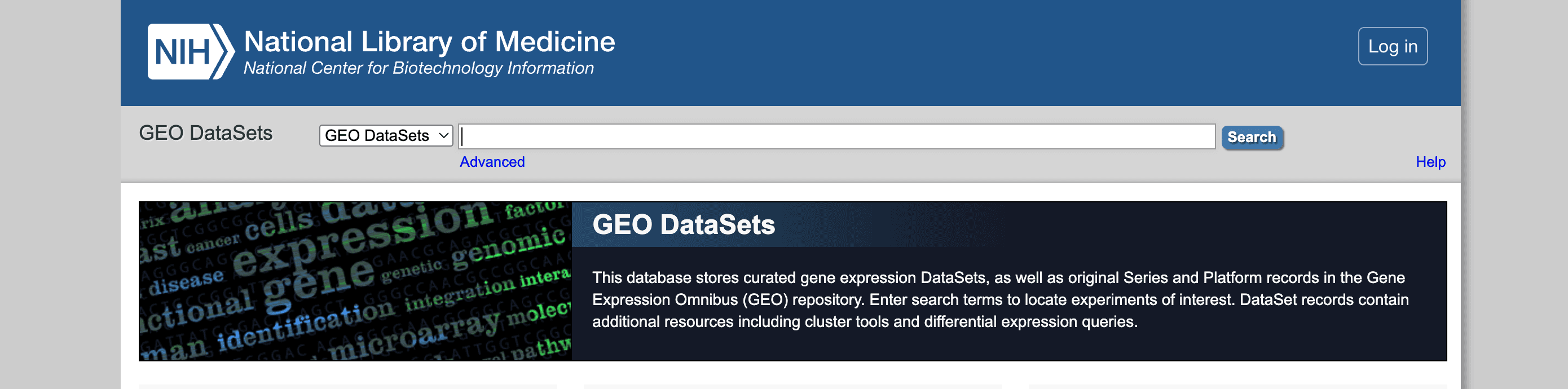
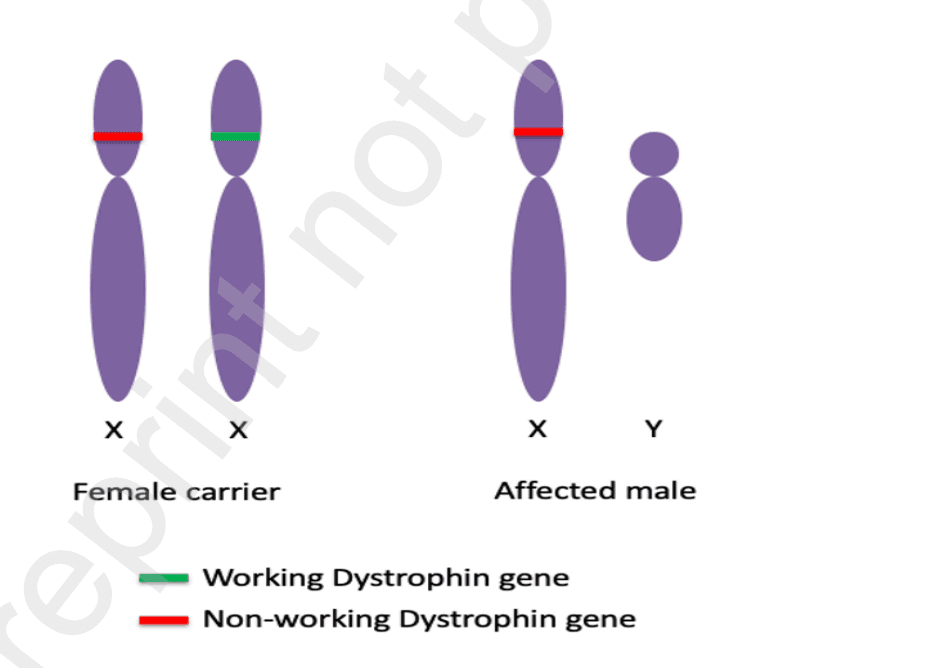
This project applies classical machine learning, preprocessing, and feature selection to gene-expression data from the NCBI Gene Expression Omnibus (GEO) to evaluate which models are best suited for diagnosing Duchenne’s Muscular Dystrophy. A core theme of the work is treating differentially expressed genes as molecular biomarkers, using statistical filtering and feature selection to isolate genes whose expression patterns most strongly align with pathological status, then training supervised models on those biomarker signals.
WHAT I DID
- Identified and curated two compatible gene-expression microarray datasets (GSE3307, GSE6011), ensuring overlap in gene features for valid dataset merging.
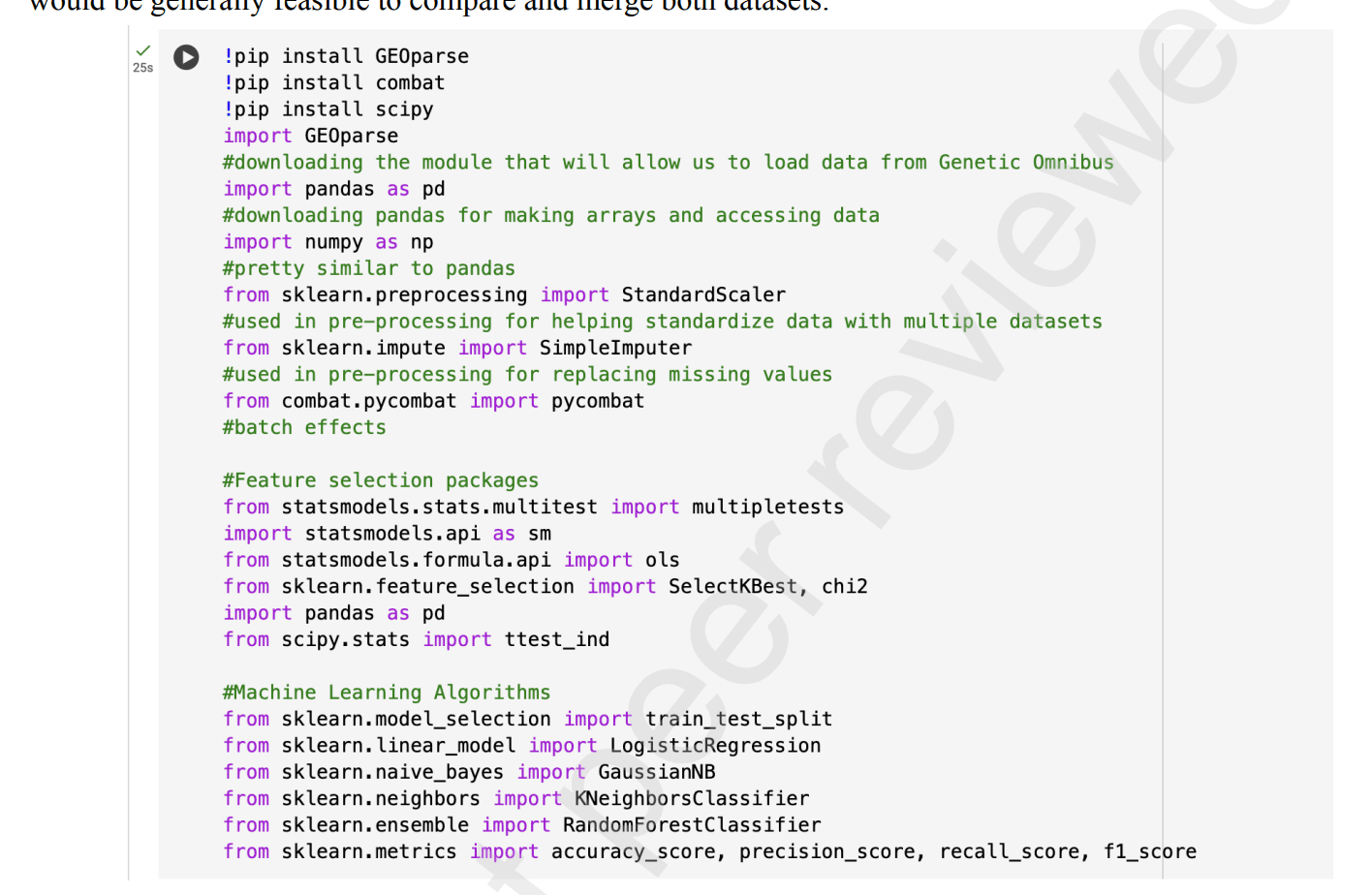
- Trained and evaluated supervised models (Logistic Regression, Naive Bayes, KNN, Random Forest) using an 80/20 train-test split.
- Implemented a reusable evaluation function to compute accuracy, precision, recall, and F1 score, enabling systematic comparison.
- Authored the full research manuscript, documenting model performance and methodological limitations.
RESULTS / IMPACT
- Achieved 90%+ accuracy using Logistic Regression and Random Forest, with Random Forest providing the strongest balance of precision, recall, and F1 score.
- A subset of genes had a statistically significant association with muscular dystrophy status. Some line up with known pathways, and some are candidates for a follow-up study.
- I wrote a preprocessing and model-comparison pipeline on GEO data. The same steps can be pointed at other neuromuscular expression sets.
- I posted the pipeline and the results as a public preprint.
LESSONS + NEXT STEPS
- Learned how preprocessing and feature selection shape biological ML pipelines, including extracting genomic data from GEO.
- Extend the pipeline to RNA-seq data and evaluate modern deep learning architectures for diagnostic performance.
- Explore other genetic disorders with publicly accessible genomic datasets.
RESEARCH PAPER
Scroll through the full paper directly below.
If the preview doesn't load, open the PDF or view the full paper.
GALLERY