← Back to Projects

3D Brain Model

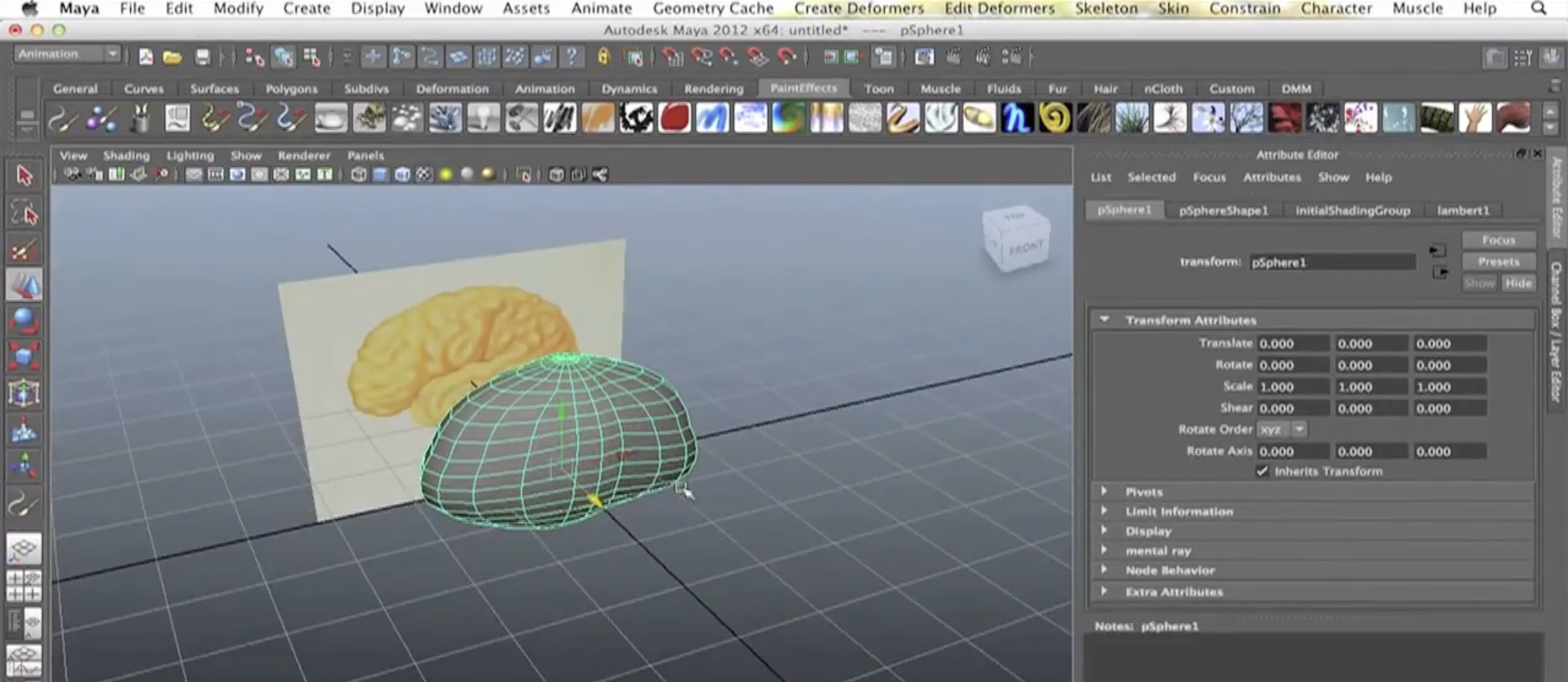
A high-school study piece: I modeled a brain in Maya, then printed and labeled it.

Archived

  • Maya
  • CAD
  • 3D Printing

Key outcomes

  • Modeled anatomy with print constraints in mind
  • Printed and labeled a physical study model
3D Brain Model, photo 1

Project overview

Maya brain model cleaned for FDM, printed, and labeled as a study piece.

System architecture

Maya model → print prep → physical labeled print.

Digital sculpt
Gyri/sulci forms in Maya.
Print prep
Geometry cleaned for FDM stability.
Physical labeling
Tangible study artifact.

Engineering decisions

DecisionAlternativeWhy
Clarity over micro-detailMaximum mesh detailReadable printable anatomy.

Results and future work

Physical artifact. Labeled printed brain produced from Maya geometry.

Still open. Archived early work; not a research-grade atlas.

  • Sectioned multi-color prints if revisited.
Full engineering log

Motivation

Why I started this

What pulled me in, and what I wanted to get better at.

Why I built it

I wanted a brain I could hold, not another Maya screenshot.

What interested me

Detail that will not print is just ego. Walls and overhangs decide what survives.

What I wanted to learn

Early reminder that physical builds punish sloppy geometry.

System Overview

How the system fits together

Maya brain model cleaned for FDM, printed, and labeled as a study piece.

01

Digital sculpt

Gyri/sulci forms in Maya.

02

Print prep

Geometry cleaned for FDM stability.

03

Physical labeling

Tangible study artifact.

Data flow

Maya model → print prep → physical labeled print.

Engineering Breakdown

Broken down by discipline

Each block is the requirement, how that part works, what I checked, and what is still open.

01CAD → Print

CAD → Print

Goal

Preserve anatomical readability in a printable solid.

Design

Sculpted cortical detail balanced against overhangs and wall stability; physical labels after print.

Challenges

  • Detail vs print reliability.
  • Label placement without obscuring form.

Iterations

  • Digital only
  • Print test
  • Labeled study model

Final implementation

Archived physical model kept as early build evidence.

Physical model
3D printed brain model

Printed anatomical study piece.

Key Design Decisions

Design decisions

DecisionAlternativeWhy
Clarity over micro-detailMaximum mesh detailReadable printable anatomy.
Notes on these decisions

Clarity over micro-detail

How much cortical detail survives FDM?

Max detail shreds on printers; readability teaches more.

Readable printable anatomy.

Results & Validation

What held up

What worked in the end, what I can show for it, and where it's still limited.

Physical artifact

Photo of printed model

Labeled printed brain produced from Maya geometry.

Limitations

  • Archived early work; not a research-grade atlas.
Bench notes

The longer design notes, the timeline, and the revisions. The sections above are the system and what I measured.

Evolution

How it got here

The steps I can put in order from the notes. A clip opens from its still.

  1. High school

    Model + print

    End-to-end physical artifact.

Reflection

Looking back

What surprised me, what I'd redo, and questions I'm still chewing on.

What surprised me

  • Print failures teach topology faster than tutorials.

What I would redesign

  • Earlier overhang reviews.

Future improvements

  • Sectioned multi-color prints if revisited.

Questions that emerged

  • What detail is pedagogically necessary versus decorative?

Notes

  • Physical artifacts force precision software can paper over.