01Electromechanical Actuation
Electromechanical Actuation
Goal
Open and close the flower with multiple servos when someone steps into range, without killing the rail.
Design
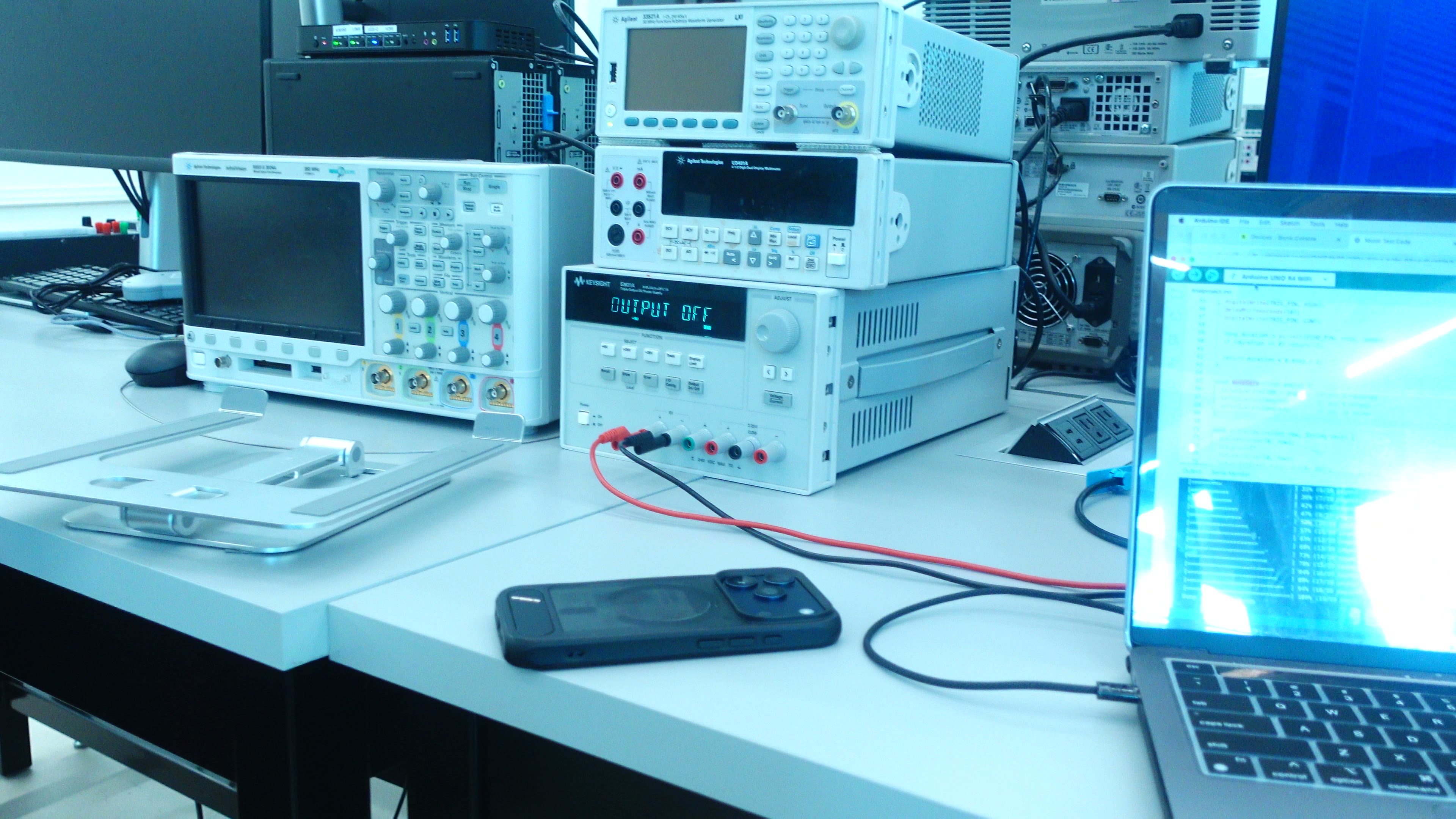
Ultrasonic proximity gates a coordinated open sequence. Concurrent servo peaks are treated as a power and timing problem, not just a PWM list.
Challenges
- Concurrent servo loads brown out rails if sequencing and supply margin are wrong.
- Opening on noisy distance readings looks broken even when the mechanics are fine.
- Demo lighting and camera setups hide intermittent stalls that show up on stage.
Iterations
- Single-servo bring-up.
- Multi-servo open/close with staggered peaks.
- Distance-gated bloom so presence, not a button mash, opens the flower.
Final implementation
Proximity-triggered bloom motion integrated with the wireless message path and validated in live demos.
Live behavior
Get close and the flower opens; remote interaction stays on the same system.